
Deals are the new world order
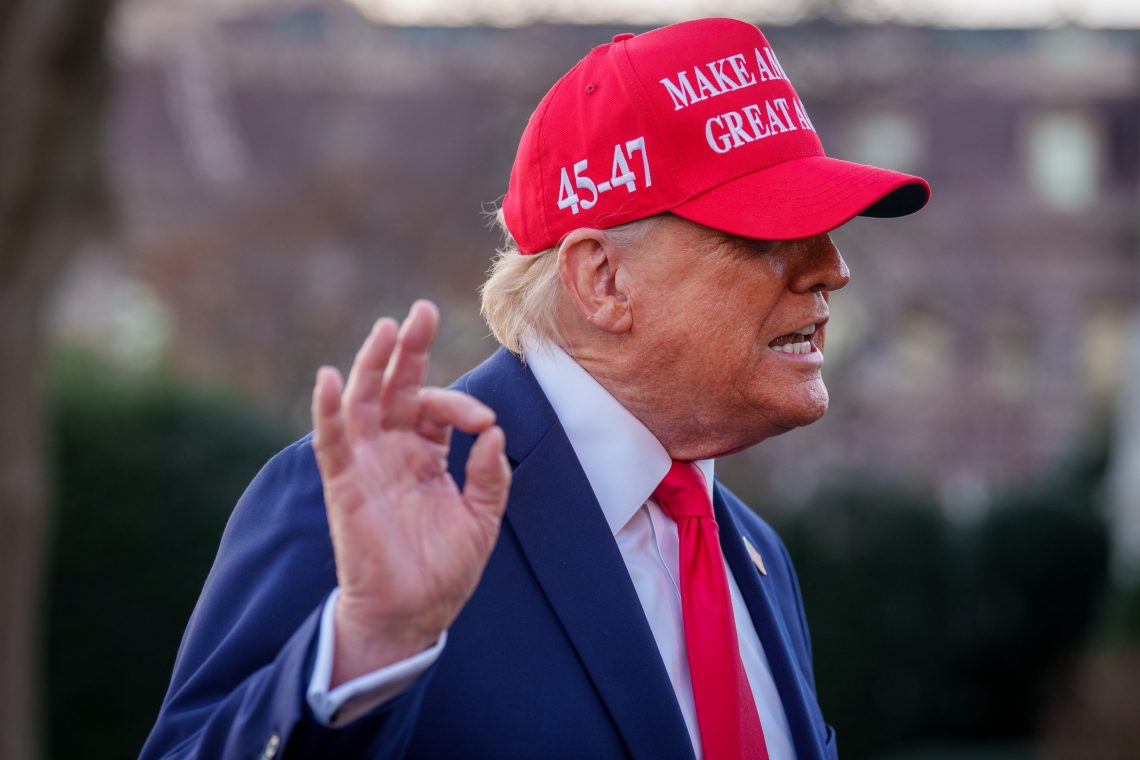
A term is making the rounds: „transactionalism.“ Loosely translated, it means the art of the deal. The master of the announcement: Donald Trump, the new president of the United States. As if we didn’t know any better, many Europeans are left gasping: access to raw materials? Buy Greenland! Security for Europe? Maybe for a price. An ethic for AI? Only business matters. Only the deal with Russia and Ukraine, which Trump boldly announced in his first 24 hours in office, is still pending. Nevertheless, it is important to note that the potential for disruption is great – for the world’s political structure as a whole, but especially for Europe.
Why is the temptation to find solutions through transactional politics – that is, through deals – so great? Because the alternative – getting bogged down in complicated, never-ending and ultimately non-binding multilateral agreements and institutions – is not very encouraging. Instead, it promises concrete results within a reasonable timeframe, the advancement of one’s own interests – or at least breakthroughs on issues that have been discussed for a long time without results.
Focus on self-interest
Transactionalism follows the logic of economics: the focus is on one’s own interests, with a specific goal in mind, and the primary motivation for action is price. Whether services and considerations complement each other, fit together at all, or can even advance a common goal is irrelevant. The main thing is to get the deal done. Questions of value take a back seat to abstract, overarching plans or long-term ambitions. The only thing that matters are specific interests and short-term benefits for each party. Opportunities must be seized, no matter how opportunistically. Each partner wants to gain an advantage. The result is called a win-win situation.
Political processes take time Politics is above such base wheeling and dealing. It claims to uphold norms and values, to be guided by overarching goals, and to develop solutions for the public good. However, the fact that such processes take a long time and that the concrete benefits are not immediately apparent must be accepted for the sake of responsible politics.
In the theory of international relations, these two views are neatly separated: realism on the one hand, liberalism on the other. The former assumes that states always pursue their own interests first and foremost, and that in critical situations they follow the reasons of the state. The latter flies the flag of progress and development: it strives for freer, democratic societies, a sustainable economy, and a fairer distribution of profits, with the goal that everyone can benefit from a rising standard of living. In reality, there seems to be a clear division between these two approaches.
In the US, the Republicans stand for realism, the Democrats for liberalism. In the transatlantic relationship, too, the roles are clearly defined: Trump – like China under Xi Jinping – pursues cold realism, while Europe tries to hold on to a friendlier liberalism. It’s a choice between pressure and dialogue, between poker and process. Multilateral institutions are increasingly being replaced by bilateral deals.
When the temptation becomes too strong
However, such a black-and-white view only tells half the truth. Recent history makes this clear. China’s influence in Europe, for example, is a prime example of the temptation of deals to which European member states have succumbed in droves. Numerous countries, especially in Eastern Europe, have allowed themselves to be entangled by China through the Silk Road project and propaganda tool.
The infrastructure projects planned as part of the Silk Road may be valuable for trade, but the financial and political dependencies involved should not be underestimated, especially since China has mastered the art of strategy. The so-called cooperation between China and the Central and Eastern European countries (CEEC), in which joint projects are politically coordinated, can undermine potential majorities for the EU’s own projects.
It would also be an illusion to believe that an international organization like the United Nations functions on the basis of pure love of peace and altruistic cooperation. On the contrary, without the will to prevail and the sheer power of the United States, the liberal agenda of the past 30 years would not have been pursued at all.
Borrowing from China and Russia
The fact that China and Russia are now using their power to make pacts with the Global South is, objectively speaking, just as rational – and cannot be prevented without counter-pressure and offers from the democratic world. It is interesting to note, for example, how loudly European refugee policymakers are considering linking development aid to readmission agreements, including in Switzerland.
What does this mean for Europe in the near future? The continent faces several major challenges, two of which stand out: the independent guarantee of its own security and independent technological development. Europe has two basic options: either its member states continue to be „seduced“ and seek their luck in bilateral deals with Trump or Xi – or the EU pulls itself together, flexes the muscles of the single market and creates the conditions for a secure and prosperous Europe that cannot be easily crushed between the two great poles.
The art of the deal would then be to get the best out of both the United States and China – for an independent Europe, but still in an interconnected world.